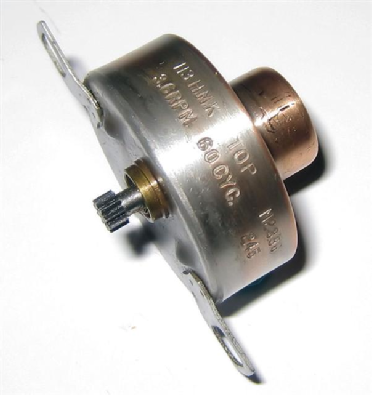


Telechron Clock Rotor Type H:
The Telechron H clock rotor series made it's debut in the 1930's and became the workhorse
of the GE/Telechron clock lineup through the 1960's. The primary H series rotor was
the H-3 which turned at 3.6 RPM and has a 10 tooth pinion gear. The earliest Telechron
H-3's had nickel/brass cases with bronze bushings. Telechron switched to copper
and finally lower cost aluminum (also lower quality internal parts).
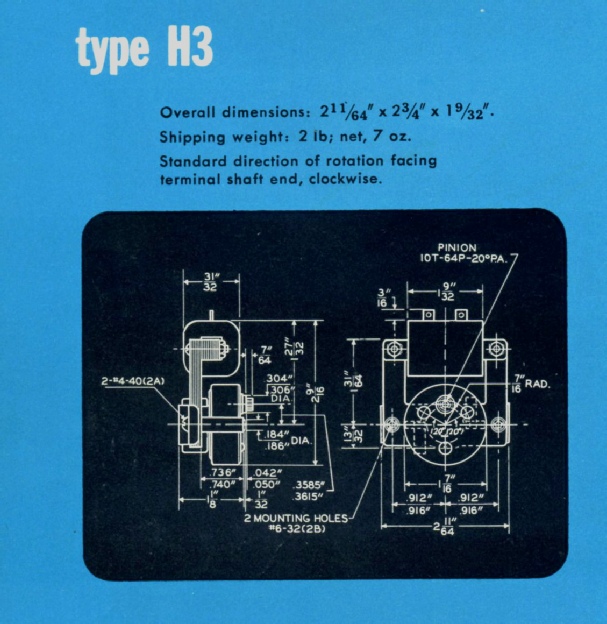
The O.D. of an H series rotor is about 1-3/8". Typical motor dimensions shown below.

Telechron Nickel/Brass H-3 Rotor:
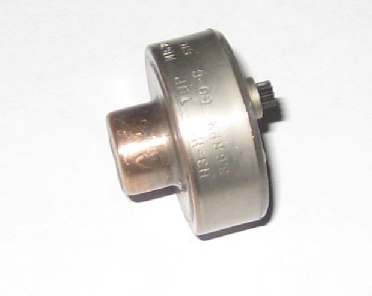
Telechron Copper H-3 Rotor:
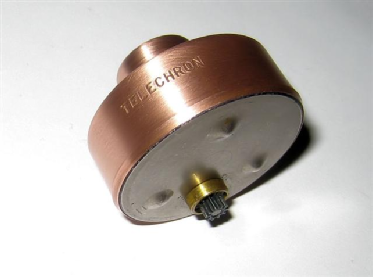
Telechron Aluminum H-3 Rotor:
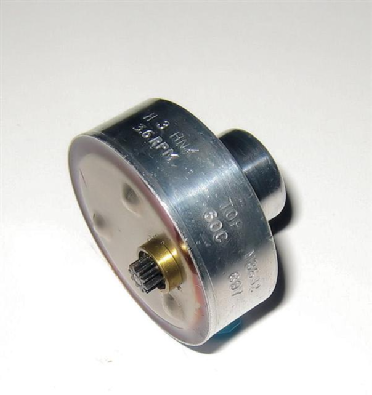
There are also some variations of the Telechron H rotor design. Here's a Telechron
F style rotor that has integrated standoffs in the body of the rotor. In most applications
an H-3 will replace one of these fairly scarce F's using two seperate standoffs.
This rotor had a short production run. It was the first version of the 3.6 RPM rotor
starting in the 1930’s.
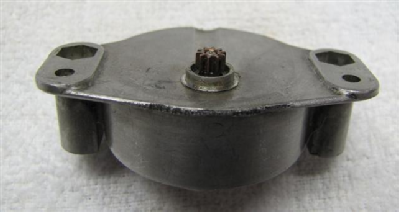
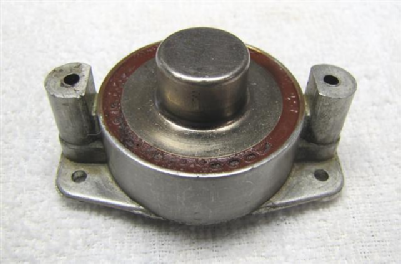
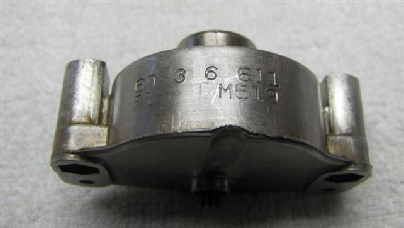
Here's a Telechron H-10 Clock Rotor (Compared to H-3). The H-10 was a stronger torque
version with a longer tail and used with Telechron B style coils. The H-10 was used
in some Revere Westminster clocks.

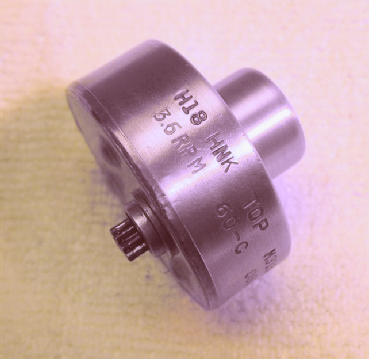
Telechron also produced another high torque H rotor called the H-18. This rotor
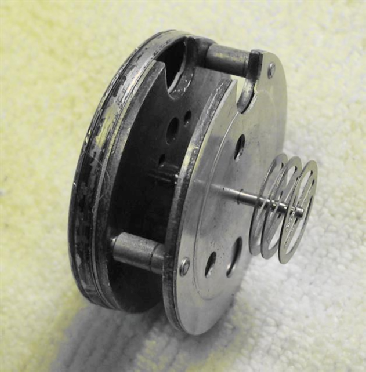
looks identical to the common H-3 except it has a 3rd armature disk in the tail to
give it extra torque for certain Revere clocks:
Three armature disks = Higher Torque
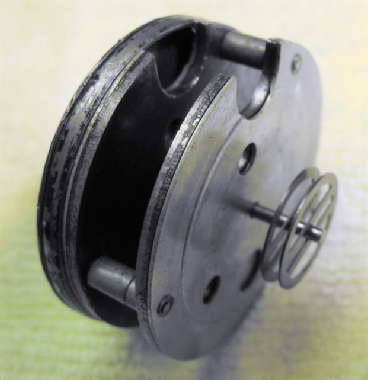
Standard H-3 with two armature disks.
Some alarm clocks require this variation of the Telechron H-3 rotor that has an extended
pinion shaft. Some F rotors also came with this style long shaft. This H-3 rotor
also has brackets which serve no meaningful purpose. The brackets were eliminated
fairly quickly in the H series rotors.